

WHY MAKING MAKES US FEEL GOOD

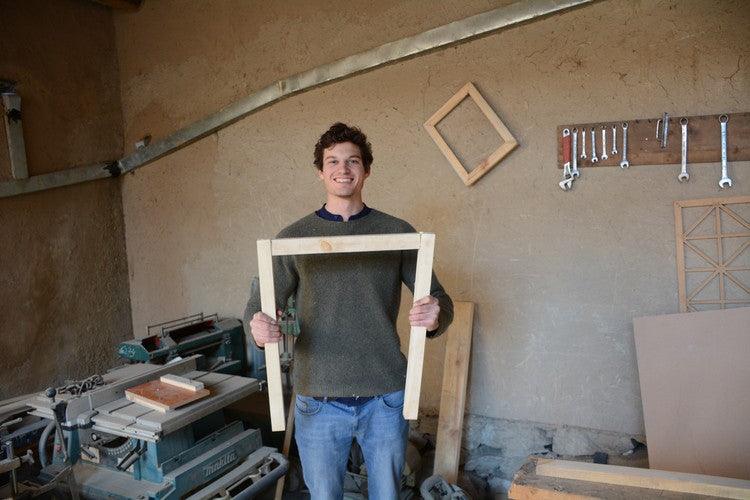
I have recently taken up carpentry classes. I have no talent for making things with my hands, and the few things I’ve been able to make are very poorly put together. But for three hours a week I saw, I sharpen, I sand and I hammer. And it makes me feel good.
So, in my current job setting up and supporting Afghan artisanal businesses, when an artisan comes to my office to tell me that they are leaving their craft behind them, it feels a great loss. For them it is a sensible calculation. Taking a job as an office worker is more attractive on a number of fronts. The pay is better, and more regular, the working environment is more comfortable, and white-collar work is perceived as higher status.
How can I argue with that? It is, after all, a bit rich for me to lecture them on the satisfaction and dignity of craftsmanship from behind by laptop screen.
The status of the ‘maker’ in Afghan society has gone the way of the status of the maker in the developed world. Society’s educational systems and occupational structures are deformed by a prejudice against manual labour. The desk rules over the workbench.
Working closely with craftsmen over the last few years, it is clear that this artificial hierarchy makes little sense. Why should the administrator feel superior to the carpenter?
For a start the work is neither more intellectually demanding, nor more satisfying. As Matthew Crawsford argues in Shop Class as Soulcraft, in modern companies creative thought is centralized in the hands of the few. As a result the average white-collar employee feels, accurately, like a replaceable cog in a soulless machine. This is not the case in a manual trade such as his own – motorcycle repair – where his work constantly engages his cognitive, problem-solving abilities.
Modern office work is unsatisfying because day to day we are denied the satisfaction of seeing individual agency in the things we do.