

Paradise Lost & Found: Babur Gardens
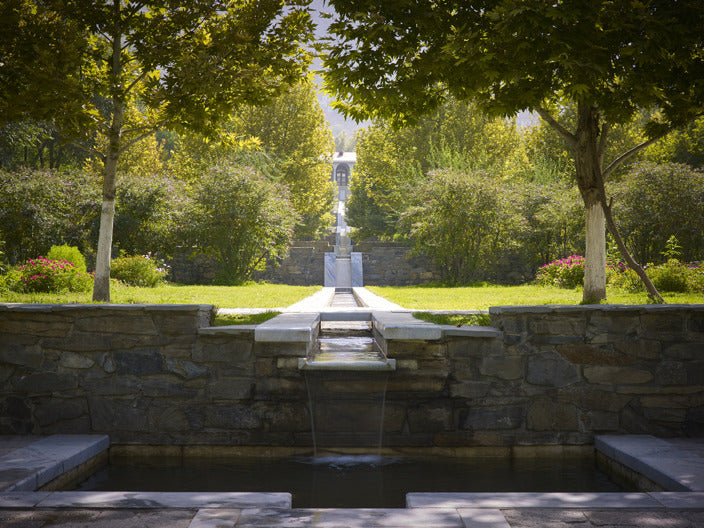
Fig 1. Babur gardens [source unknown]

Fig 2. Babur in one of his beloved gardens[source unknown]
Despite the horrific turmoil Afghanistan has faced in recent years, gardens and gardening have long held an integral place in Afghan culture. Nowhere is this more profound than in Kabul where, despite the conflict, a small team of gardeners have nurtured the revival of their city’s pride and joy: Babur Gardens.
Bagh-e Babur was created in the 16th century under the rule of Emperor Babur, the founder of the Mughal Empire. Despite Babur’s empire stretching from modern day Kyrgzstan to northern India, Babur always had a special love for Kabul, noting in his diary ‘no place in the world is known to have such a good climate as Kabul.’
Babur’s diary, the Baburnama, consistently professes his love of nature through tales of his interactions with trees, flowers and gardens. Miniatures painted in precise Mughal miniatures even depict Babur himself instructing the creation of a garden. Although he eventually died in Agra, India, Babur’s body was transported back to Kabul to be buried in his favourite spot - what is now known as the Bagh-e Babur.
Throughout the following centuries the garden remained an integral part of Afghan culture however, like much of the country, it suffered greatly during the turmoil of the civil war and Taliban government. Its trees were cut down for firewood, its waterworks destroyed and the Mujahedin set the buildings which surrounded the garden on fire.
After the Taliban government was driven out in 2001 the garden became the focal point of the desire to restore a sense of peace to Kabul, a symbol of hope for a better future.
The Aga Kahn Trust for Culture, along with the help of a team of German archeologists restored the garden to its original from, revealing the long lost waterways, pools and terraces. Most importantly, it was replanted with native flowers from the nearby hills and is now tended to by a team of passionate Afghan gardeners.
The garden’s transformation into a public park means the citizens of Kabul now have a space to relax in nature, a rarity among the concrete blast walls which have enveloped the city. Friends meet for picnics on the grass, and groups of young men gather to take photos of one another for their facebook profiles.

Fig 3. The beloved gardens[source unknown]