

Article: Label Step: Certified Fair Trade
Label Step: Certified Fair Trade
Hi, my name is Kitty and I manage production at ISHKAR. We have just come back from an invaluable trip to Afghanistan, where we were able to gain first-hand understanding of our production processes and meet the incredible people behind the creation of our handmade rugs.

At ISHKAR, we believe that extraordinary craftsmanship deserves recognition, respect and fair compensation. As a certified Label STEP Fair Trade Partner, we work closely with suppliers, weavers and independent auditors to support ethical production throughout our rug supply chains in Afghanistan.
For us, Label STEP is far more than a certification. Their work provides invaluable visibility into the lives of the artisans who create our handmade Afghan rugs, helping us better understand the challenges they face and the improvements that can be made.
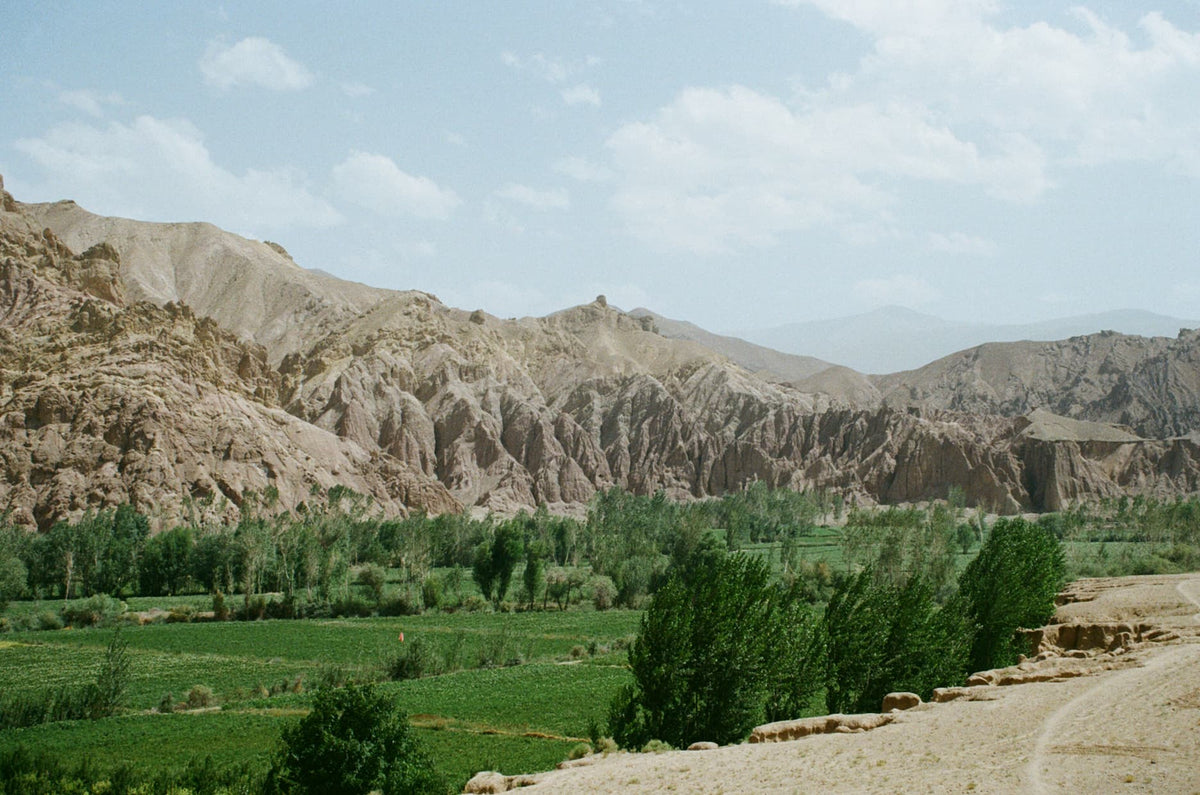
During our recent visit to Afghanistan, we had the opportunity to meet the Label STEP team, visit suppliers and sit with weavers in their homes. The experience offered a deeper understanding of Afghanistan's rich weaving heritage, the realities facing artisans today, and the importance of maintaining responsible and transparent supply chains.
Meeting the Label STEP team
Founded to promote fair trade and ethical standards within the handmade carpet industry, Label STEP works directly with weaving communities across Central and South Asia. Their standards cover human rights, fair wages, working conditions, environmental responsibility and the prohibition of child labour. As a certified partner, ISHKAR undergoes independent audits that provide oversight throughout our production network.
What makes their work particularly valuable is the human element.
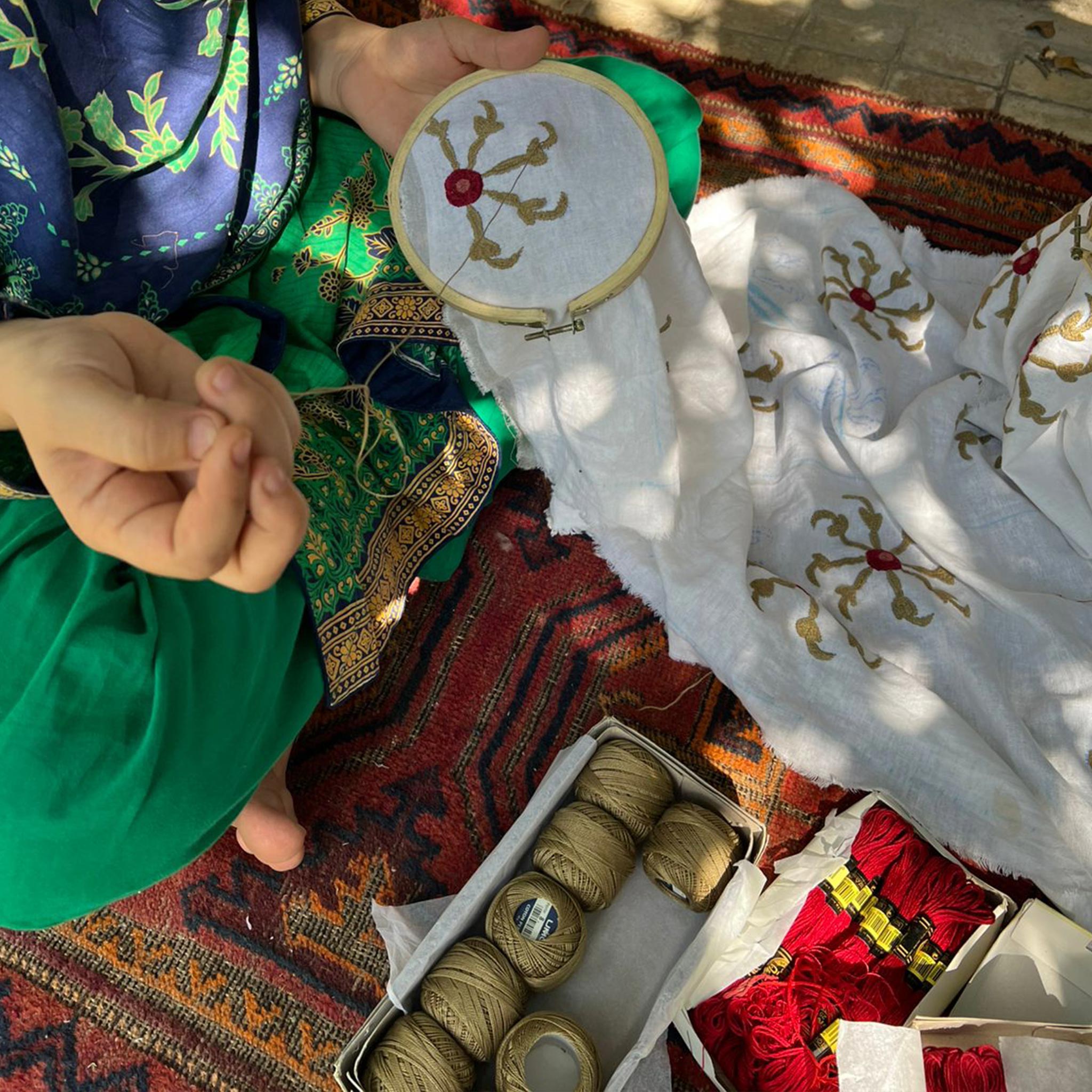
Rather than assessing production from a distance, the Label STEP team regularly visits weavers in their homes and workshops. They conduct health checks, run training programmes, record wage receipts and build trusted relationships with the artisans themselves. These relationships create a platform where weavers can discuss concerns openly and confidentially.

One of the highlights of our trip was meeting the STEP team. Over a delicious meal in Mazar-e Sharif, we had the pleasure of meeting Dr Wahida Ibrahimi and social worker Taiba Reshad. As professional women working in Afghanistan today, they spoke truthfully about both their own experiences and the challenges facing women weavers across the country.
Their insights revealed the complex social landscape within which Afghan weaving exists today. For generations, carpet weaving has been one of Afghanistan's most important cultural traditions. Yet the work remains physically demanding while wages typically remain low. At the same time, restrictions on employment opportunities for women have left many with few alternatives outside home-based work.
Many women in weaving villages spent years pursuing education and professional training, with ambitions to build careers in fields such as healthcare, education and law. Following the Taliban takeover in 2021, opportunities in many of these professions have become significantly restricted. As a result, weaving remains one of the few viable sources of income for countless women and families.
While we cannot influence national policy, we can work to improve conditions within the supply chains we support. That is why our partnership with Label STEP is so important. Their work provides the transparency and accountability that enables meaningful change.

Visiting our flatweave rug producer
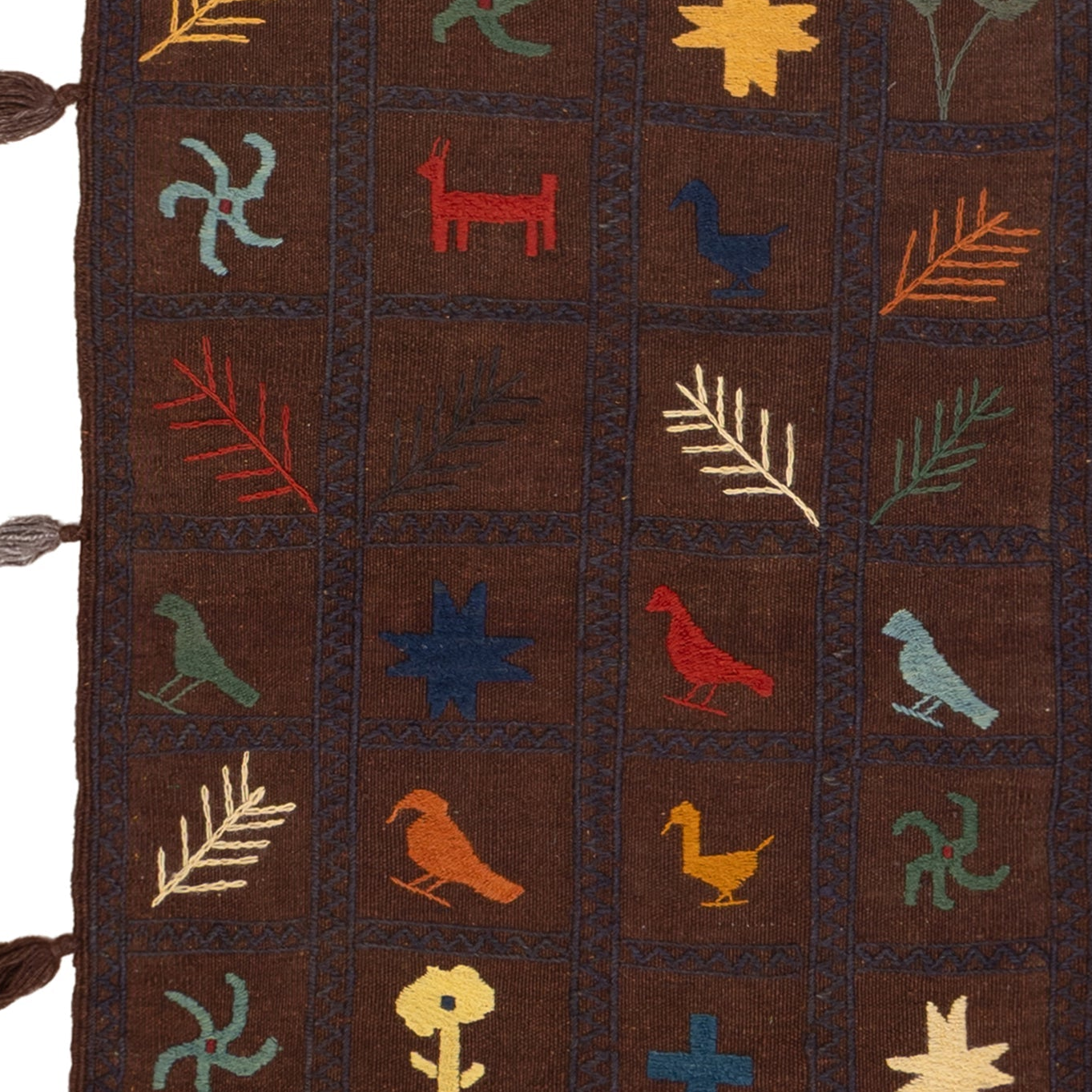
One of the most memorable parts of the trip was finally meeting our long-time partner, Ghafoor. For more than eight years, Ghafoor has overseen the production of our flatweave rugs.

Ghafoor welcomed us with a traditional Turkmen meal of home-cooked Ishleki, a delicious dish made of ground lamb or spinach sandwiched between thin layers of dough and fried in a large circular pan until crispy.
Later, he took us to meet some of his weavers working from their homes. Seeing our rugs on the loom, watching the work in action, and meeting the women behind the production was truly unforgettable. The warmth and generosity we received was incredible: at one home, we were even sent away carrying bunches of grapes from the family's garden.

One particularly special moment was flicking through the crinkled pages of Ghafoor's treasured notebook of natural dye recipes, carefully preserved and passed down from his father. It was a poignant reminder that Afghan rug making is not simply a profession. It is a living tradition, carrying generations of knowledge, artistry and cultural identity.
These visits also allowed us to have honest conversations about wages and livelihoods. Understanding these realities firsthand has directly informed decisions we are now taking to improve outcomes for the artisans who produce our handmade rugs.

Visiting our hand-knotted rug producers
We also spent time with Turquoise Mountain, our principal partner for hand-knotted Afghan carpets, and visited a number of their suppliers.
Their office is situated inside one of their main producers’ workshops. Visiting the facility offered fascinating insight into the extraordinary skill required to create a hand-knotted rug, from the earliest design stages through to the finished piece.

Every rug begins with the development of artwork and colour palettes. Yarn is then carefully selected and dyed according to highly specific recipes before being distributed to weavers. Depending on the complexity of the design, the weaving process can take many months.
Once complete, the carpet returns to the workshop, where it is meticulously sheared, washed and finished by hand. These final stages soften the wool, stabilise the dyes and bring out the rich colours and character for which Afghan rugs are renowned. Seeing this process firsthand reinforced our appreciation for the remarkable craftsmanship behind every handmade carpet we sell.

What we learned and what comes next
Our visit to Afghanistan reinforced something we have always believed: meaningful ethical sourcing begins with building strong relationships.
Meeting suppliers, spending time with weavers and learning from the Label STEP team gave us invaluable insight into both the challenges and opportunities within Afghan rug production today.
The combination of direct engagement and independent monitoring allows us to better understand wages, health outcomes and working conditions across our supply chains. It also provides the information needed to take action where improvements can be made.
As a direct result of conversations made during this trip, we have committed to incrementally increasing what we pay our artisans for flatweave production by 40% over the next 12 months.Through our partnership with Label STEP, we are able to monitor these improvements over time through monthly audits that track wage progression and health audits.

Afghanistan's weaving tradition is one of the finest in the world. Behind every hand-knotted carpet and every flatweave rug is a community of highly skilled artisans preserving centuries of craftsmanship.
We remain committed to supporting those artisans, strengthening ethical production, and ensuring that the beauty of Afghan rugs is matched by the integrity of the supply chains behind them.
Interested to learn more about how Afghan rugs are made? Explore our Afghan Rug Guide to discover the extraordinary craftsmanship behind our production.