


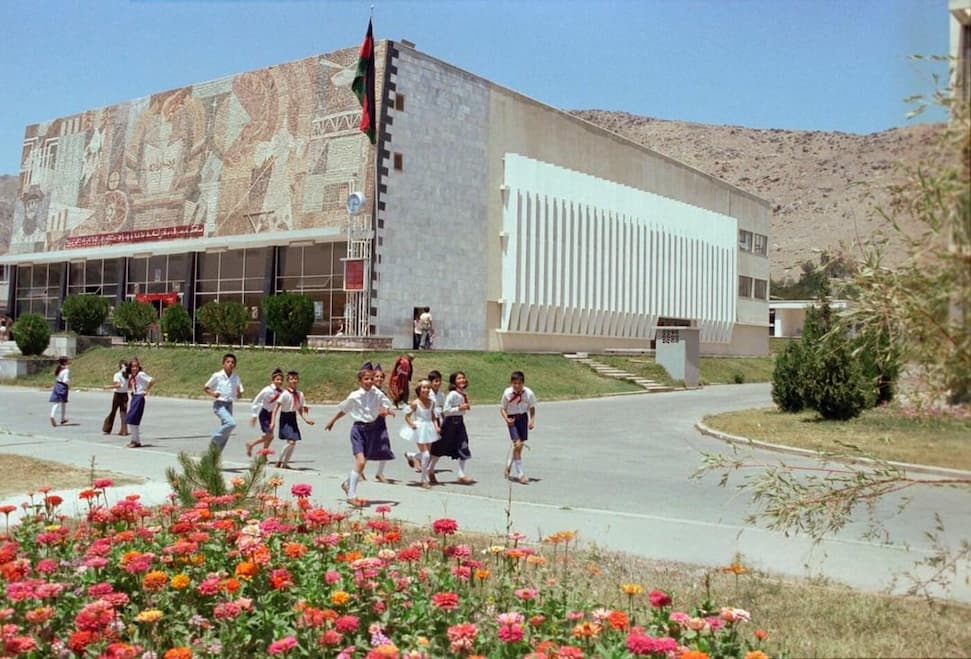
The Soviet Imprint on Afghan Architecture
When I lived in Afghanistan it was a commonly heard complaint that while foreign aid programmes focused on development which was often intangible in nature - women’s empowerment workshops, rule of law programs, democracy and governance training - the Soviets left a legacy on the physical infrastructure of the country. One of the most visible of these was the Microrayon housing development, which I used to drive past on the way to work every day. It was a vision of modern living: well-built flats with hot water and central heating.
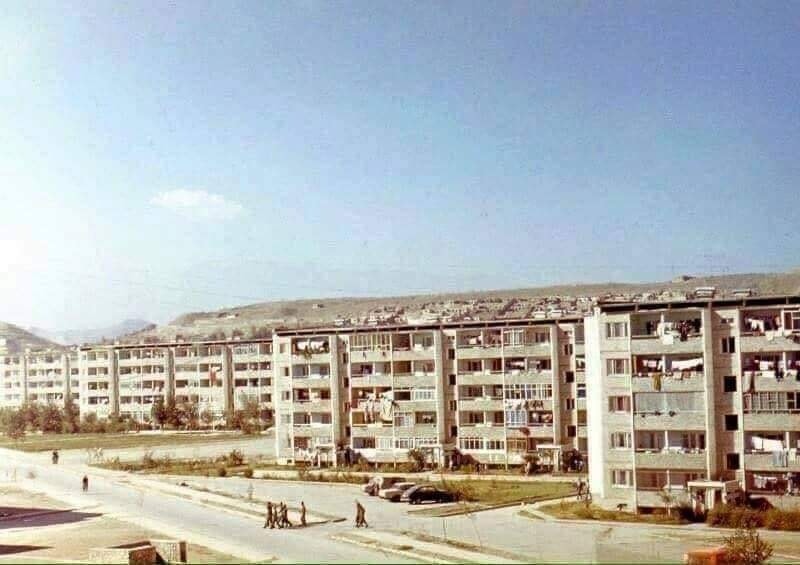
Micro-Rayan Apartments, Kabul, 1972 (c)
Microrayon was not the only prominent architectural Soviet project in Kabul. The Silo, a vast concrete bread factory commissioned in the late 1950s, looms over the western edge of the city, its grain elevators and production halls designed to feed the capital on an industrial scale. Kabul Polytechnic, also completed prior to the Soviet invasion, is another notable example - a full Soviet-designed campus assembled in large part from prefabricated concrete panels shipped down from the USSR.
Soviet architecture was an instrument of statecraft. Through a common aesthetic the Soviets sought to demonstrate that a modern, scientific, socialist way of life had arrived, and to set that life in visible contrast to what had come before. As a result these buildings share a visual language that extended far beyond Afghanistan. From Dushanbe to Bishkek, a traveller through Soviet Central Asia encountered the same vocabulary: concrete panels, ribbon windows, geometric mosaics, mass housing arranged on rectilinear grids.
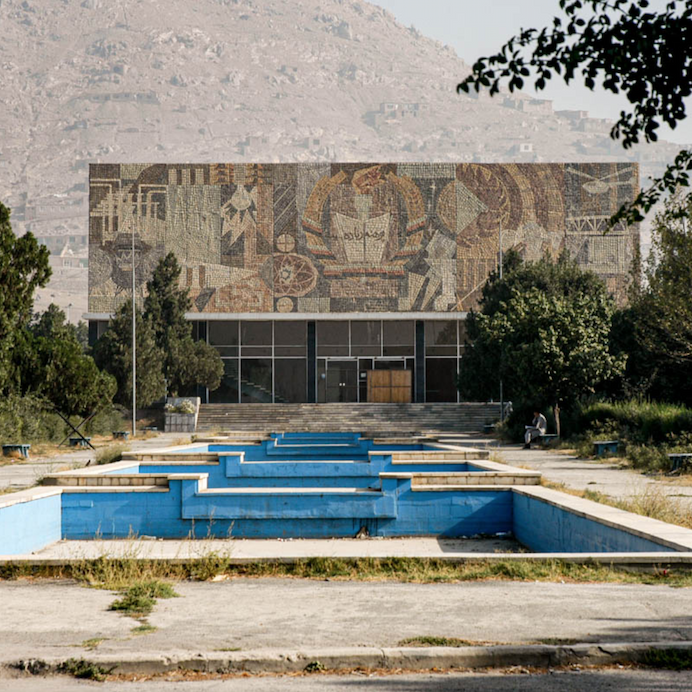
Kabul Polytechnic University - Omar Sayami
Soviet architectural plans were laid over an older urban fabric consisting of mudbrick courtyard houses turned inward toward family life, narrow bazaar streets, carved wooden balconies, domed mosques, and madrasas built around water and shade. This was a Persianate and Turkic architectural tradition that had evolved over centuries, shaped by climate, kinship, and faith. Soviet modernism was its near-opposite. It was vertical where the traditional architecture was horizontal, public where buildings were private, repetitive where the old city grew organically over generations. Soviet buildings were not simply functional. They presented an argument about how life should be lived.
The Soviet project to remake the region in concrete was vast in ambition. In Afghanistan, the factional fighting that consumed Kabul after the Soviet withdrawal damaged much of what had been built and the political project the architecture was meant to embody collapsed entirely. Yet many prominent Soviet buildings have endured to this day. The Microrayon flats remain desirable addresses. The Salang Tunnel, cut through the Hindu Kush by Soviet engineers in 1964, is still the country's most important road. The contrast the Soviets engineered into the landscape has softened, over time, into coexistence.
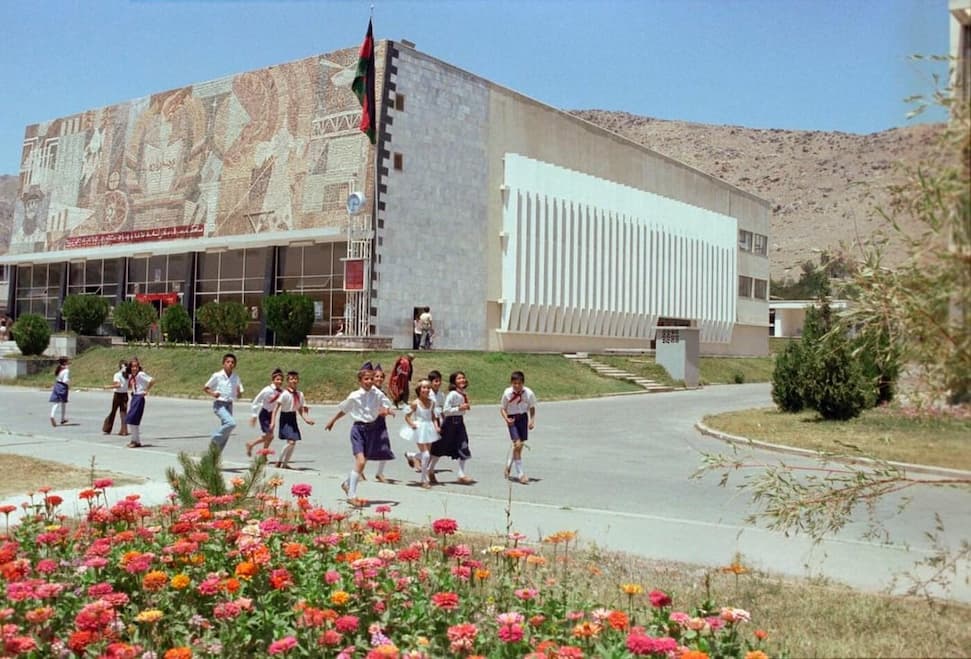
Kabul Polytechnic University under the Democratic Republic of Afghanistan, 1981
Edmund Le Brun
ISHKAR co-founder