

The Birth of Blue
Until relatively recently in human history ‘blue’ as we know it did not exist. There is no word for ‘blue’ in Ancient Greek, Hebrew, Chinese or Japanese. As hard to imagine as it is, ‘blue’ was simply not a colour the ancients were familiar with.
As Dr Berke - a man who has devoted years of research to the history of blue pigment - explains, early mankind had no access to blue because blue is not what you call an earth colour. ‘You don’t find it in the soil’.
So where does one find it?
Up until the 18th century, there was only one place known in all of Europe, Africa and Asia, where blue in its natural form could be found. To find ‘blue’ the ancient greeks would have had to cross the Mediterranean, traverse the deserts of Persia, and climb up, up into the high mountains of north eastern Afghanistan. Here, in the valley of Sar-e Sang, exist mountains streaked with seams of deep blue rock; Lapis Lazuli.
The scarceness of Lapis Lazuli made it a priceless commodity in a blueless world.
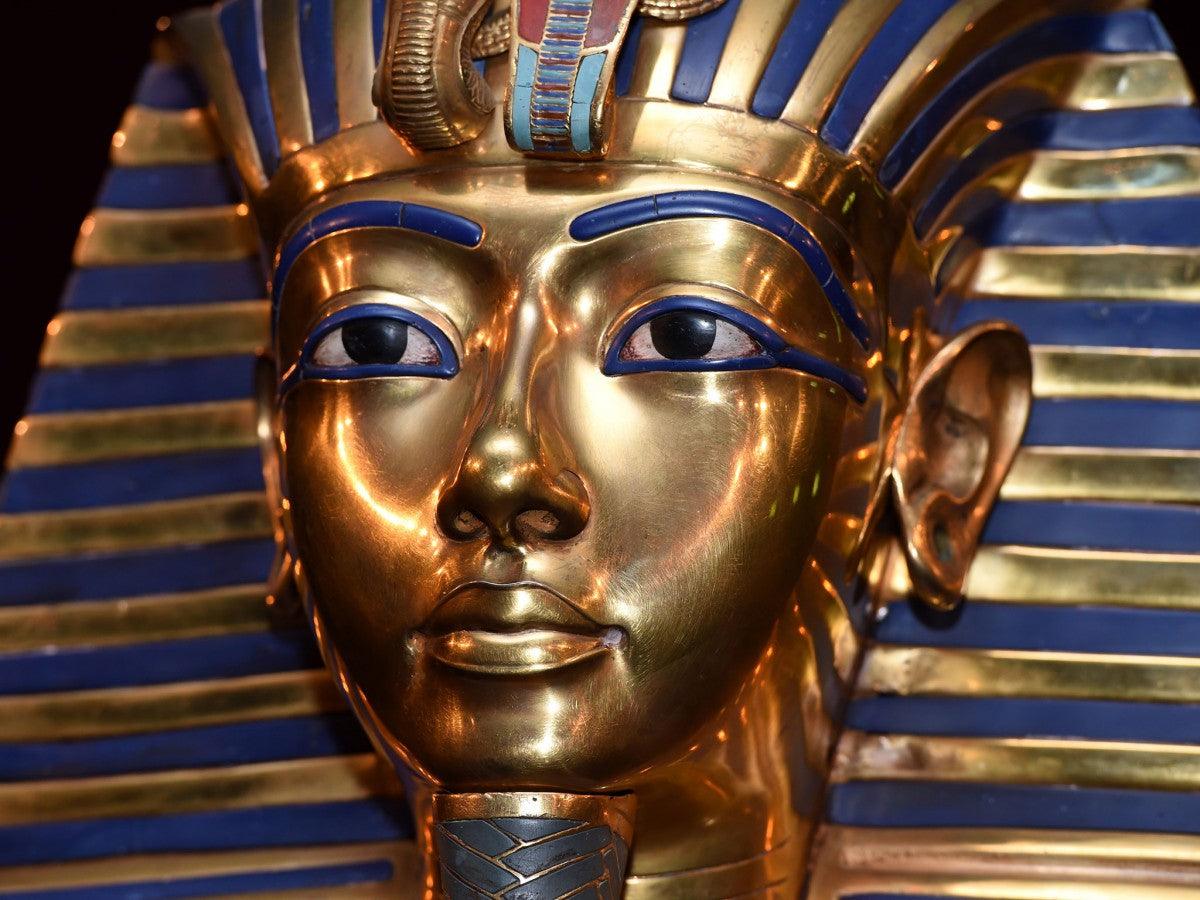
The Egyptians became obsessed with the stone, taking Lapis from the mines of Sar-e Sang and powdering it into eye shadow for Cleopatra, and the funeral masks of Pharoahs. During the Crusades Lapis Lazuli became more widely available in Europe, but its rarity still dictated astronomical prices, equaling the price of gold right up until the industrial age.
Demand for Lapis reached fever pitch during the Renaissance. Ground into a fine dust, Lapis formed the prized pigment ultramarine. The quantity of ultramarine used in Renaissance paintings was an important marker of price for wealthy patrons, and its preciousness made it a fitting color for the robes of the Virgin Mary.
Thus Blue – the world’s most popular colour – is inextricably linked with divinity, luxury, trustworthiness and authority.
Framing this emblematic stone as simply as possible, Peacock House Lapis cufflinks pay homage to the millennia old obsession with the pure blue rock from Afghanistan.